Publications
Topics: All HCI Robotics Design
2026
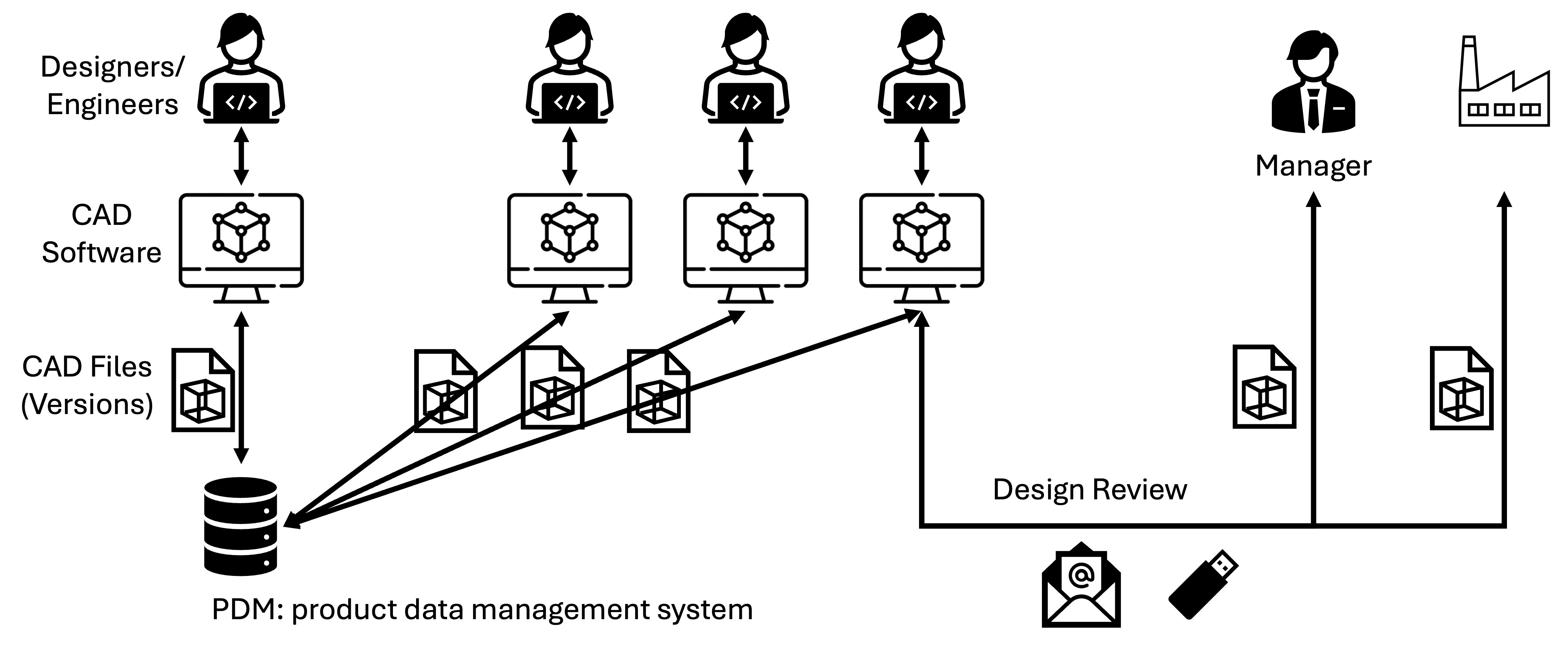
Untangling the Timeline: Challenges and Opportunities in Supporting Version Control in Modern Computer-Aided Design
Proceedings of the 2026 CHI Conference on Human Factors in Computing Systems (CHI '26)
HCI
Abstract
Version control is critical in mechanical computer-aided design (CAD) to enable traceability, manage product variation, and support collaboration. Yet, its implementation in modern CAD software as an essential information infrastructure for product development remains plagued by issues due to the complexity and interdependence of design data. This paper presents a systematic review of user-reported challenges with version control in modern CAD tools. Analyzing 170 online forum threads, we identify recurring socio-technical issues that span the management, continuity, scope, and distribution of versions. Our findings inform a broader reflection on how version control should be designed and improved for CAD and motivate opportunities for tools and mechanisms that better support articulation work, facilitate cross-boundary collaboration, and operate with infrastructural reflexivity. This study offers actionable insights for CAD software providers and highlights opportunities for researchers to rethink version control.
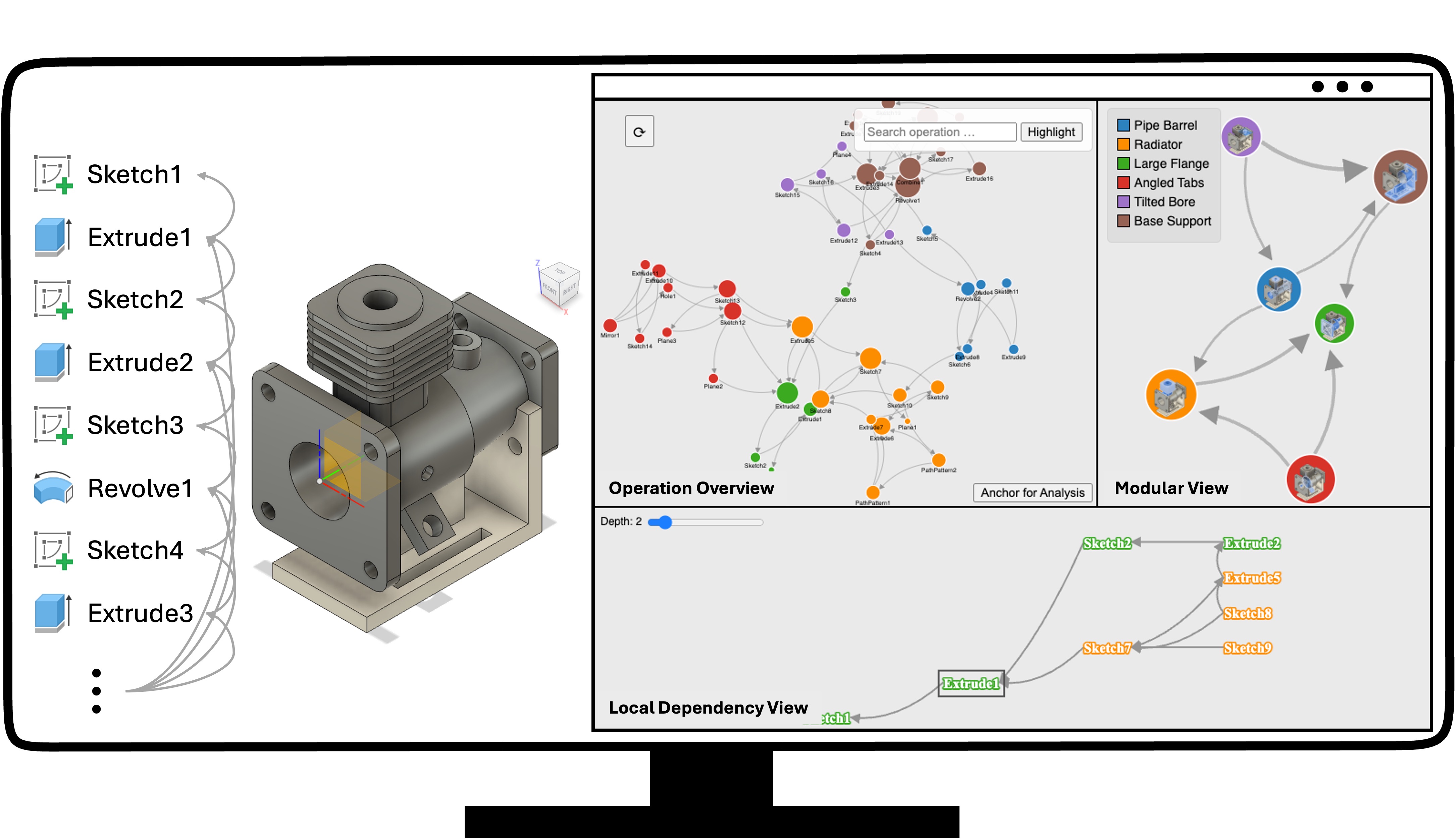
CADModelScope: Revealing the Dependency Structure Behind Parametric Computer-Aided Design Models
Proceedings of the 2026 CHI Conference on Human Factors in Computing Systems (CHI '26)
HCI
Abstract
Parametric computer-aided design (CAD) models are constructed by a sequence of operations, where each operation may reference geometries created by earlier operations. This network of dependencies enables efficient modelling of complex geometry but also results in fragile models, where small modifications can trigger cascading errors. These interdependencies are obscured in commercial CAD systems, leaving users to rely on trial and error when navigating, modularizing, and debugging unfamiliar and complex models. In this paper, we motivate, present, and pilot CADModelScope, a multi-level graph-based visualization of operation dependencies integrated into a commercial CAD platform. In a qualitative lab study, we observed how participants locate and interpret operations, and how CADModelScope enhances awareness of hidden interdependencies and supports more structured navigation. Our findings highlight the potential of using the network of operation dependency as an effective representation for understanding and interacting with parametric CAD models, and we discuss implications for future tool design.
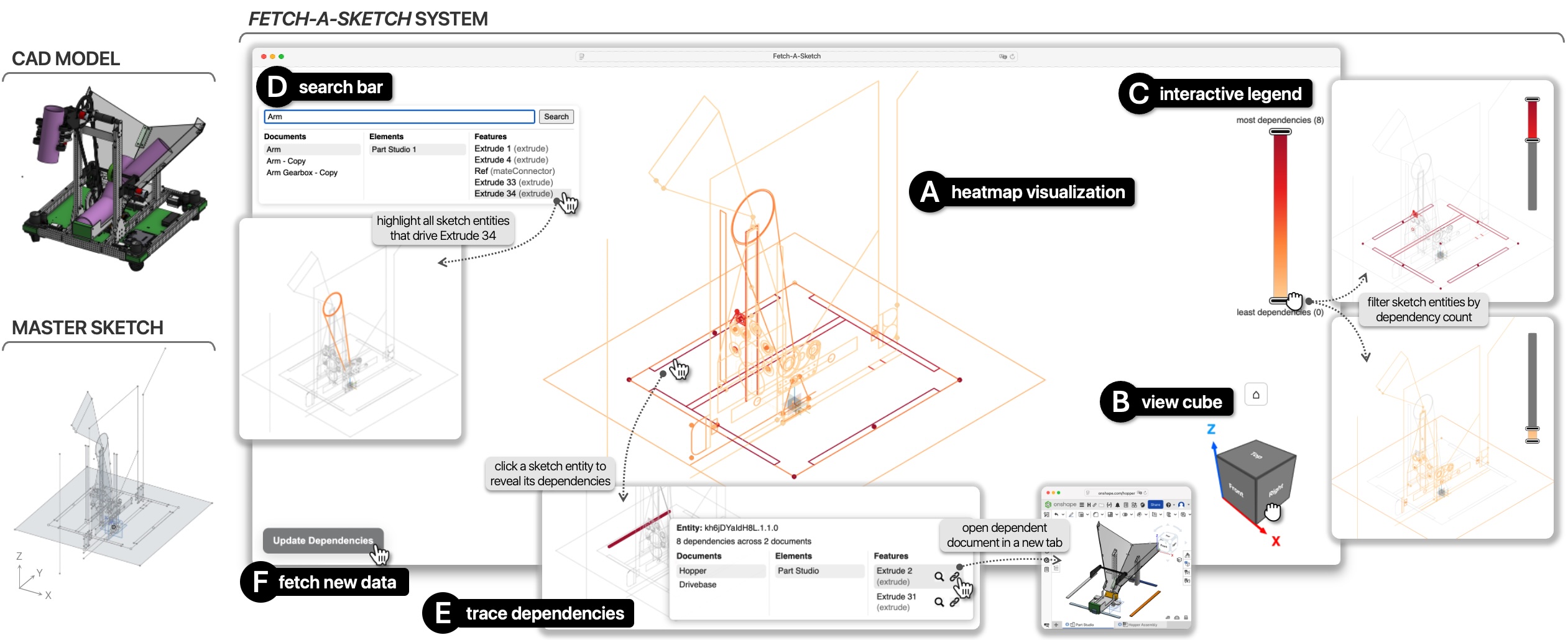
Fetch-A-Sketch: Navigating Dependencies in 3D CAD Master Sketches
Extended Abstracts of the 2026 CHI Conference on Human Factors in Computing Systems (CHI EA '26)
HCI
Abstract
Computer-aided design (CAD) models are complex artifacts built from sequences of modelling features (e.g., extrude, fillet), each dependent on previous features. Especially in large-scale projects, these dependencies rapidly proliferate, making them difficult to track, yet designers must understand these relationships to make informed changes. We introduce Fetch-A-Sketch, a prototype system that surfaces and visualizes hidden dependencies in complex 3D master sketches, helping designers anticipate the downstream impacts of changes. In a first-use study, participants reported that Fetch-A-Sketch enhanced their understanding of dependencies, enabling them to navigate unfamiliar models and plan design changes effectively. Feedback also identified opportunities to extend Fetch-A-Sketch to support more complex products and collaborative contexts, which we aim to address in future work. By making dependencies more visible and manageable, Fetch-A-Sketch supports long-term maintainability in large, complex design projects.
2024
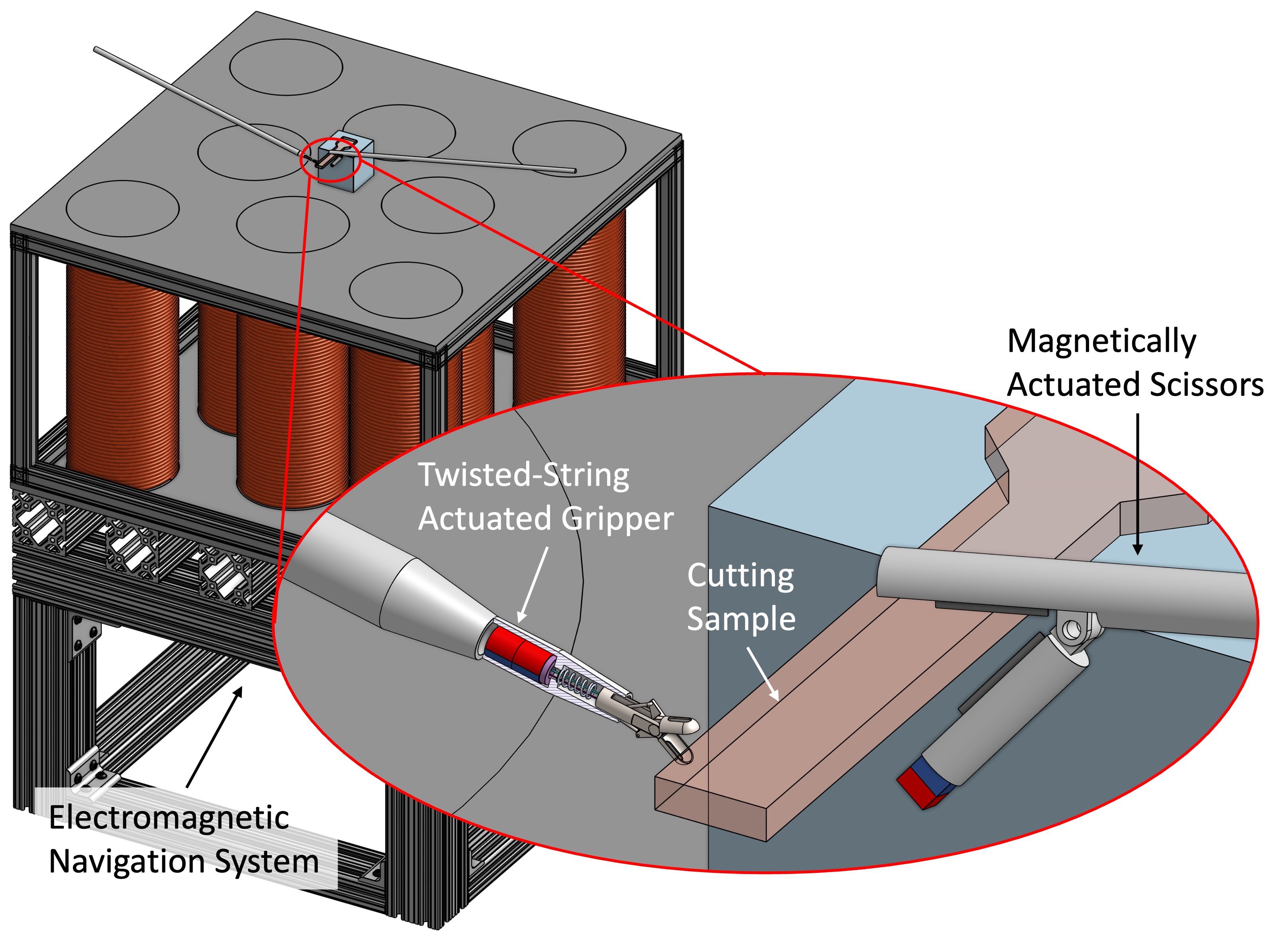
Towards Bimanual Operation of Magnetically Actuated Surgical Instruments
Proceedings of the 2024 10th IEEE RAS/EMBS International Conference for Biomedical Robotics and Biomechatronics (BioRob)
Robotics
🏆 Best Student Paper Award
Abstract
Advances in magnetically actuated surgical instruments have reduced the size and increased the dexterity of tools for minimally invasive surgery. However, studies typically focus on evaluating the control of individual instruments during tool development, while few studies examined the deployment of multiple tools, despite the common need for bimanual operations in surgery. When more than one magnetically actuated instrument is positioned in close proximity and controlled with the same magnetic field source, uncoupled and independent control of multiple instruments becomes challenging due to the complex magnetic interactions from the magnetic instruments' interference and the external field actuation. The current paper proposes a novel bimanual operation approach, where one instrument is designed to be actuated using a spatially uniform magnetic field with static directions, and the other instrument is designed to be actuated with a rotating magnetic field. The proposed concept was evaluated with experiments and demonstrated with a simulated bimanual tissue cutting task, using an electromagnetic navigation system and two magnetic tools (a gripper and a pair of scissors) that satisfy the magnetic actuation design requirements. During bimanual operation, experiments showed a 19% gripping force drop of the gripper and less than 10% closing force drop of the scissors, resulting in 35 mN of scissors closing force for cutting.
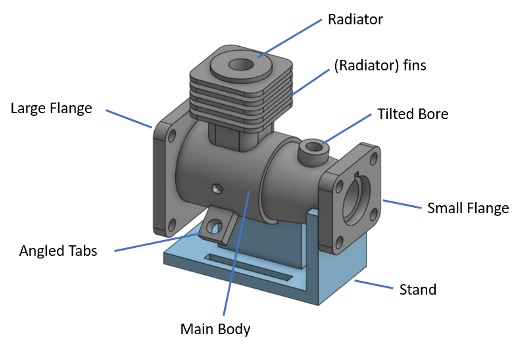
What Sets Proficient and Expert Users Apart? Results of a Computer-Aided Design Experiment
ASME Journal of Mechanical Design
Design
Abstract
As computer-aided design (CAD) tools have become an essential aspect of modern mechanical engineering design, the demand for CAD experts has increased significantly. The development from novice, to proficient, to expert user is of particular interest to the industrial and academic design communities. Yet little is known about the development of modeling choices, strategies, and patterns that characterize expert CAD skills; much of the past work that reports user action data is based on student or novice data. We compared the CAD modeling process across nine proficient and ten expert designers as they were tested to complete the same design task. Under identical conditions—the same time constraints in the same CAD platform and with the same task—the expert users were able to complete a larger proportion of the task with higher dimensional accuracy. While the experts were able to dissect and retrieve geometries from manufacturing drawings more efficiently than proficient users, they were also able to plan a modeling strategy that required less effort and revisions. With our experimental findings, we identify the demand for procedural knowledge-building for young engineers, with the ultimate goal of more effectively developing experts in engineering design with CAD.
2023
CAD Challenges App: An Informatics Framework for Parametric Modeling Practice and Research Data Collection in Computer-Aided Design
Proceedings of the ASME 2023 International Design Engineering Technical Conferences and Computers and Information in Engineering Conference (IDETC-CIE)
Design
Abstract
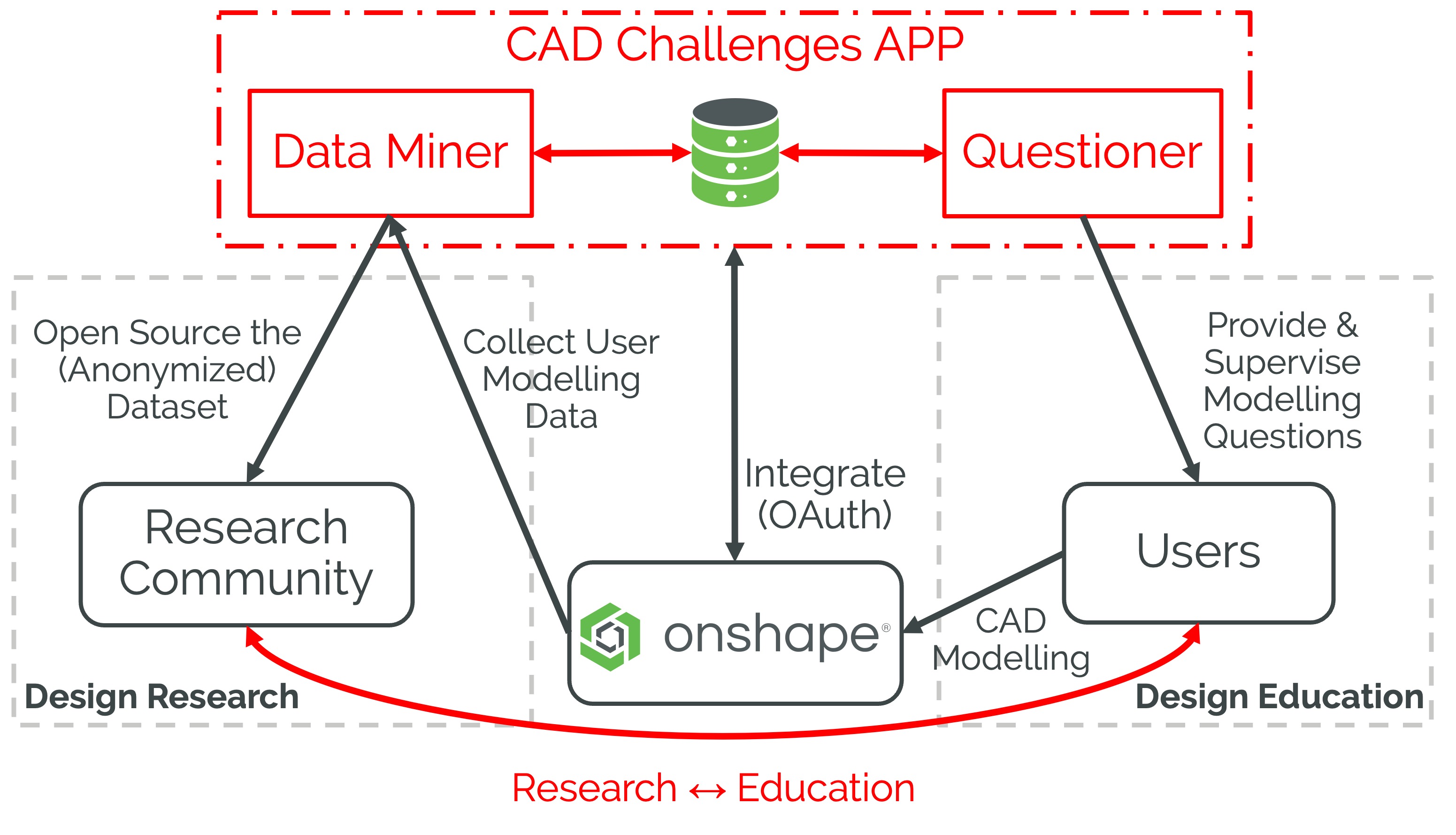
Computer-aided design (CAD) is a key tool in modern engineering design and manufacturing, making design education and design research with CAD important fields of study. Effectively teaching modelling strategies in traditional classrooms is challenging and the design research community faces barriers in participant recruitment for research studies. In this paper, we propose a framework that connects the teaching and research community with design informatics in CAD. We productized the framework, named the “CAD Challenges” web application, and integrated it to Onshape, a commercially available cloud-CAD software. With free and easy access to this app, users gain access to a library of modelling challenges from within an Onshape document. The app automatically evaluates submissions and provides feedback, enabling asynchronous learning and the development of CAD expertise through practice. After challenge attempts, data on both the design process and the completed model are collected, enabling insight into the different strategies that can be used to create the same geometry. While providing a free and accessible training tool for learners, the big data generated through challenge attempts can provide valuable insight into how students learn CAD and the modeling strategies used by experts. Benefits and opportunities enabled by the framework are discussed in detail with preliminary research analysis.
Connecting design iterations to performance in engineering design
Proceedings of the Design Society: International Conference on Engineering Design (ICED23)
Design
🏆 Reviewers' Favourite Award
Abstract
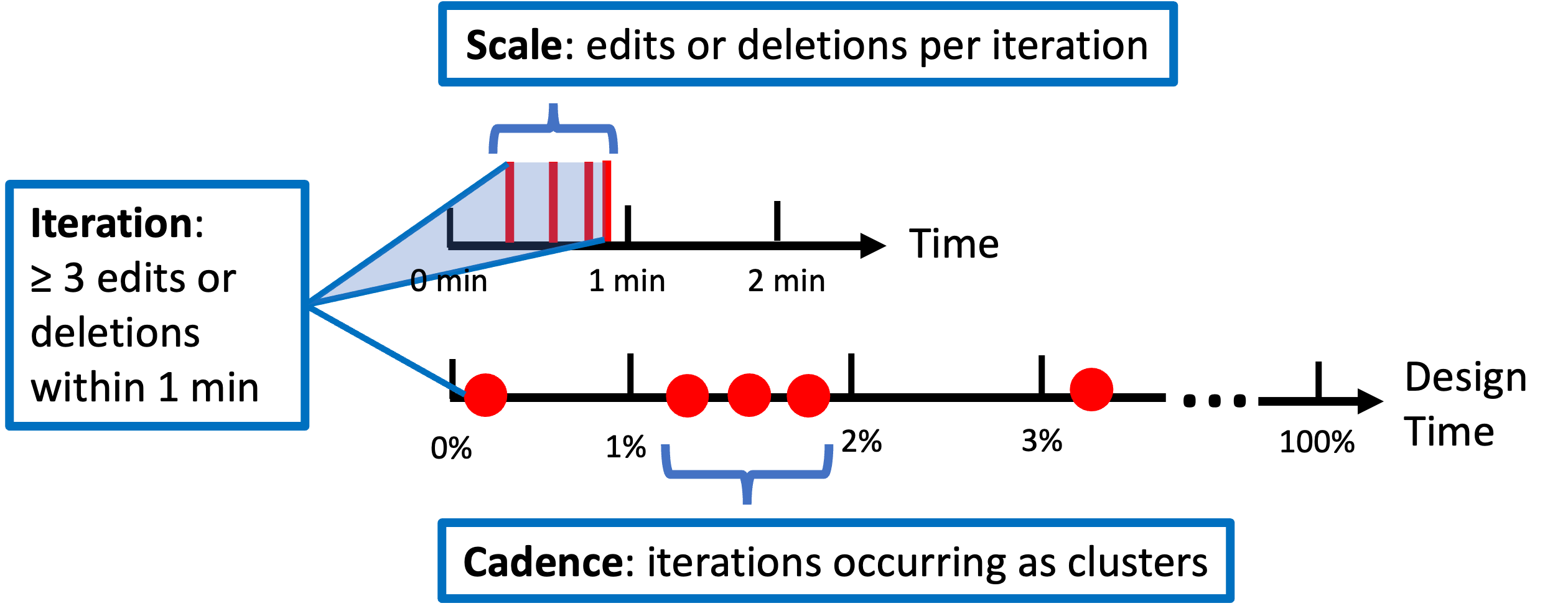
No matter a system's size, complexity, or domain, iterations are fundamental to its design process. However, there is a duality: iterations are both signs of usefully exploring the system's design space and failure to find an appropriate solution. This ambiguity means that we have not been able to connect teams' iterating behavior to their design's performance, potentially obscuring a way to influence the design process. As such, our exploratory study unpacks the relationship between design iterations and performance. We observed 88 teams in the 2020 Robots to the Rescue Competition in rich detail. Using logs of 7,956 iterations on a Computer-Aided Design platform, we analyzed how high- and low-performing teams revised their submissions, searching for consistent differences in their behavior. We found significant differences in the iterations' number, scale, and cadence between these groups of teams. These findings emphasized the correlation between certain iteration patterns and the success of a design: the best teams will likely revise differently than the worst ones. It also showed the importance of a fine-grained, time-dependent view of the design process to resolve open questions in the literature.
2022
Does Synchronous Collaboration Improve Collaborative Computer-Aided Design Output: Results From a Large-Scale Competition
Proceedings of the ASME 2022 International Design Engineering Technical Conferences and Computers and Information in Engineering Conference (IDETC-CIE)
Design
Abstract
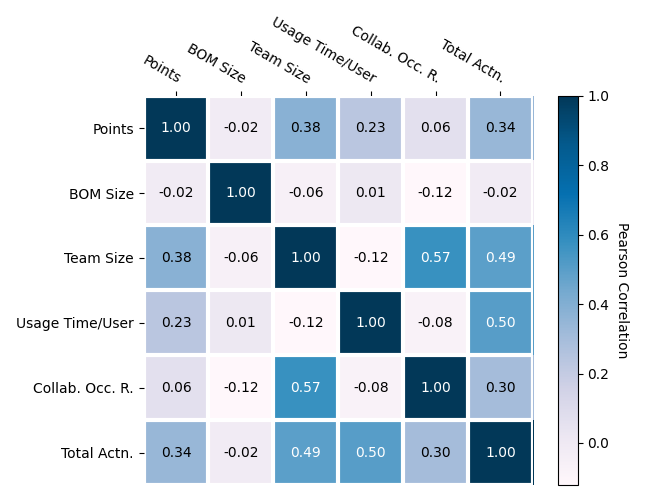
With the growing demand for distributed collaboration for large and complex design in modern engineering, the collaboration inefficiencies of traditional computer-aided design (CAD) tools are increasingly conspicuous. Emerging cloud-based multi-user computer-aided design (MUCAD) platforms bring a new working style for CAD in the form of real-time synchronous collaboration. Little research exists to characterize collaboration in CAD, and specifically the synchronicity of collaboration has yet to be examined. In this study, we analyzed the backend action logs of 101 teams' design processes from a large-scale virtual robotic design competition, where all designs were modelled in a commercially available MUCAD platform. Metrics of interest were analyzed with regression and mediation analyses to uncover factors that correlated to a team's success in the competition. Results show that team size is a positive predictor of team performance. Large teams, which tend to see a large amount of time commitment from members, were more likely to perform more CAD actions and achieve high scores from the competition. This suggests that the benefits of collaboration (e.g., economies of division of labor , learning) outweigh the potential downsides (e.g., coordination overhead, free riding) in this context. While controlling for team size, increased synchronous collaboration occurrences were observed to negatively correlate to teams' performance - a novel finding which we discuss in detail. Thus, we conclude that although large teams benefited from the MUCAD environment, a tendency for synchronous real-time collaboration did not coincide with higher performance. This study provides important evidence in the ongoing design and innovation research fields aiming to better understand collaboration. Future research should investigate the characteristics of effective collaboration strategies in MUCAD environments to develop best practice for the increasing number of design teams moving to such tools.
All's not Fair in CAD: An Investigation of Equity of Contributions to Collaborative Cloud-based Design Projects
Computer Aided-Design and Applications
Design
Abstract
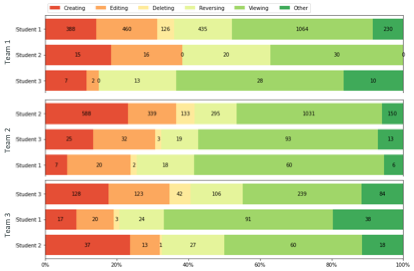
Cloud-based Computer-Aided Design (CAD) tools are changing the way design happens in industrial and educational settings. These tools enable a streamlined collaborative process, unlocking the potential for technical and teamwork integrated teaching and learning. Further, cloud-based CAD can enable distant teamwork in which information and ideas are shared in real time among team members and between students and instructors. In team projects, it is important not only to fairly assess the outcomes, but also to reduce the likelihood of unequal contributions among team members. In this paper, we re-examine a cloud-CAD data set from a team design exercise to describe how the analytics from CAD tool Onshape can deliver a metric of team member contribution by expanding on a published analytics framework, namely the Multi-User CAD Collaborative Learning Framework (MUCAD-CLF). We identify a trend of individual dominance, where one team member does a majority of the CAD work, and we then analyze the CAD actions that this dominant individual takes, looking for gatekeeping behaviour. We discuss implications of this solo-dominance phenomenon and propose future work towards improved contribution equity on collaborative CAD teams.
The multi-user computer-aided design collaborative learning framework
Advanced Engineering Informatics
Design
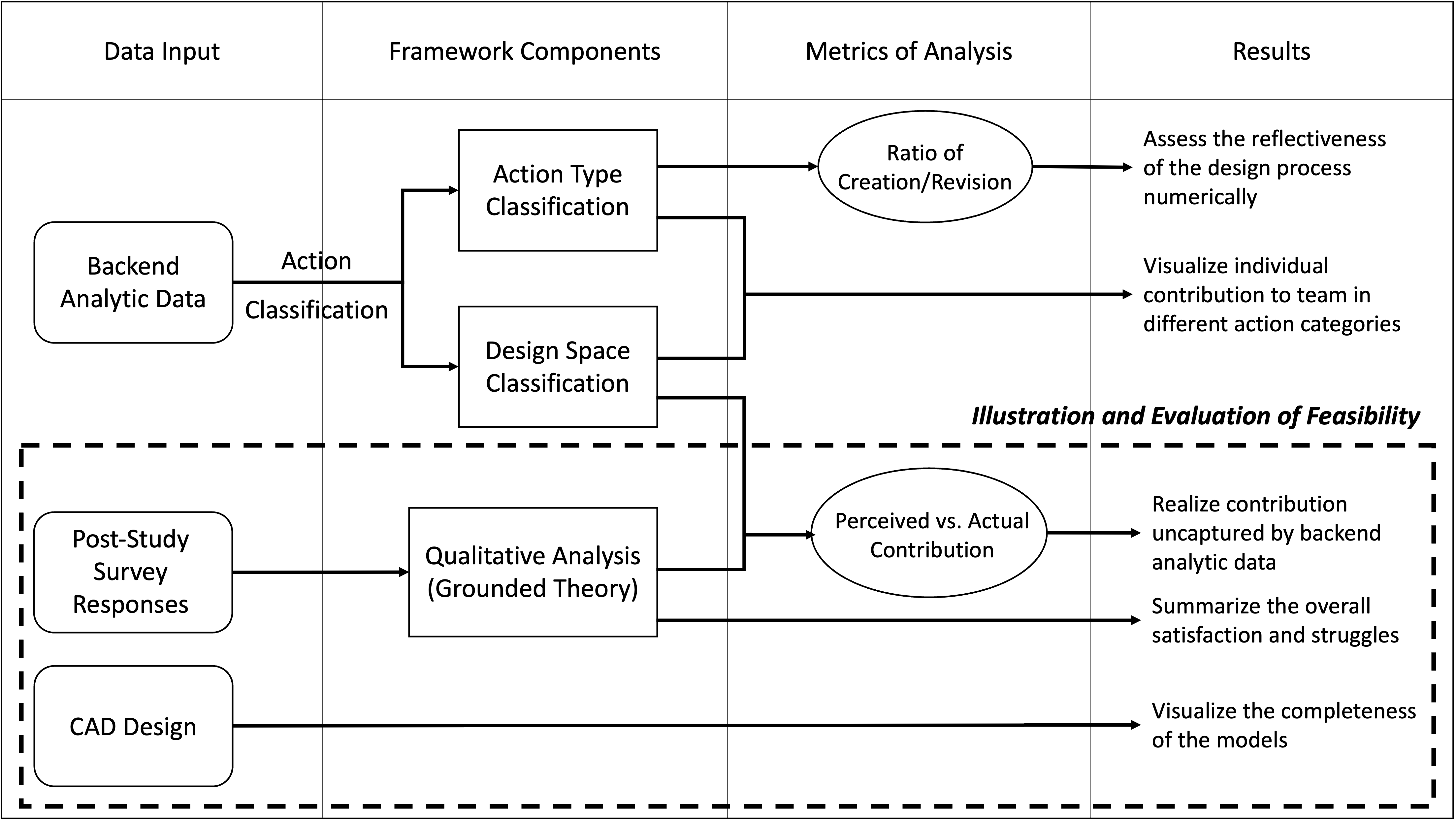
Abstract
New developments to computer-aided design (CAD) software transform a once solitary modelling task into a collaborative one. The emerging multi-user CAD (MUCAD) systems allow virtual, real-time collaboration, with the potential to expand the learning outcomes and teaching methods of CAD. This paper proposes a MUCAD collaborative learning framework (MUCAD-CLF) to interpret backend analytic data from commercially available MUCAD software. The framework builds on several existing metrics from the literature and introduces newly developed methods to classify CAD actions collected from users' analytic data. The framework contains two different classification approaches of user actions, categorizing actions by action type (e.g., creating, revising, viewing) and by design space (e.g., constructive, organizing), for comparative analysis. Next, the analytical framework is applied via a collaborative design challenge, corresponding to over 20,000 actions collected from 31 participants. Illustrative analyses utilizing the MUCAD-CLF are presented to demonstrate the resulting insight. Differences in CAD behaviour, indicating differences in learning, are observed between teams made up entirely of novices, entirely of experienced users, or a mix. In pairs of experts and novices, we see both a perceived high-satisfaction apprenticeship experience for the novices and preliminary evidence of an increase in expert design behaviours for the novices. The proposed framework is critical for MUCAD systems to make the most of the educational possibility of combining technical skill-building with team collaboration. Preliminary evidence collected in a fully-virtual design learning activity, and analyzed using the proposed MUCAD-CLF, shows that novice students gain advanced CAD design knowledge when collaborating with experienced teammates. With the user data captured by modern MUCAD software and the MUCAD-CLF presented herein, instructors and researchers can more efficiently assess and visualize students' performance over the design learning process.